Powered by XL Ultra and X4 Ultra, Harvey’s one-person workflow delivers outstanding image quality, fast setup, and reliable weekly livestreams.
For Harvey, live video has always been about learning, experimenting, and finding smarter ways to capture the moment.
After retiring from Verizon following a 30-year career, he began spending more time behind the camera, working as a videographer for conferences, church services, and live events.
Over the last decade, Harvey has worked across a wide range of camera systems and production workflows, from SDI to mirrorless cameras, NDI converters, and PTZ cameras. Each step helped him refine what matters most in real-world live production: image quality, reliability, setup speed, and flexibility.
As a one-person production team, PTZ cameras changed the game. Remote control meant fewer operators, faster deployment, and more creative freedom. But there was still one challenge that never quite went away – Low light.
Many houses of worship are not designed like broadcast studios. They are atmospheric, practical spaces where lighting can be limited, uneven, or difficult to control. For Harvey, that made finding the right PTZ camera essential.
“The only drawback to PTZ cameras has always been low light,” Harvey says. “A lot of churches just aren’t brightly lit.”
The Search for Better Image Quality
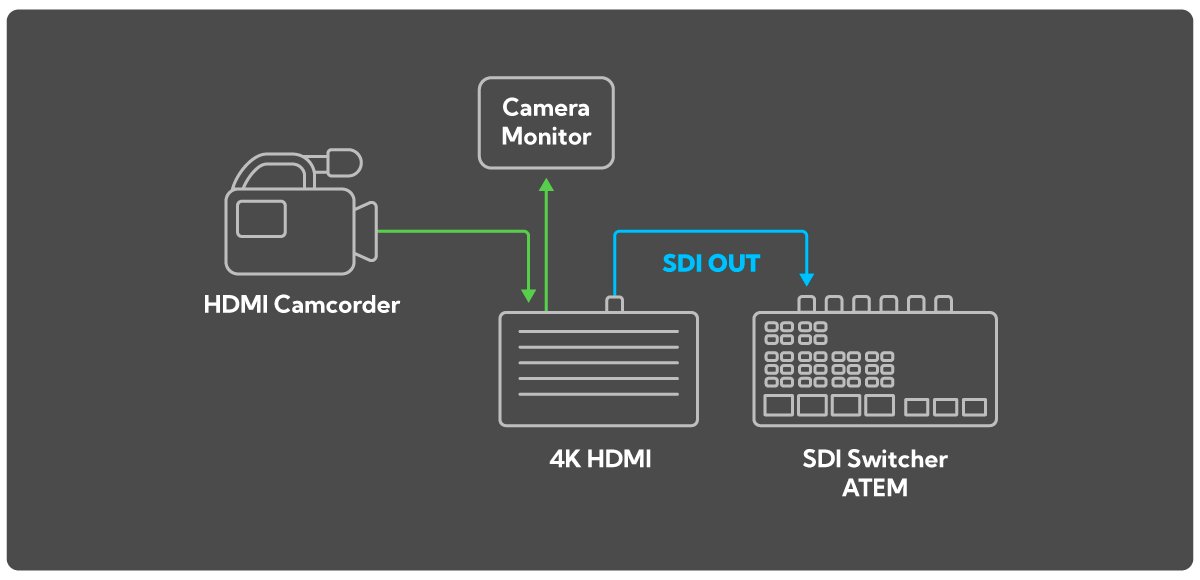
Before moving to a full PTZ setup, Harvey had been using Panasonic G85 mirrorless cameras with BirdDog Flex units to bring them into his NDI workflow. The image quality was excellent, but the setup required more cabling, more time, and more complexity.
The trade-off was clear. Mirrorless cameras delivered the image he wanted, while PTZ cameras delivered the workflow he needed. BirdDog XL Ultra gave him both.
With its large sensor, powerful zoom, NDI connectivity, PoE workflow, and professional PTZ control, XL Ultra became the camera that could anchor Harvey’s church production setup without forcing him to compromise.
When he saw the XL Ultra, the decision was easy.
“I was like, you know what? I’m going for it.”
A Smarter Weekly Workflow
Today, Harvey uses BirdDog XL Ultra every week paired with three BirdDog X4 Ultra cameras.
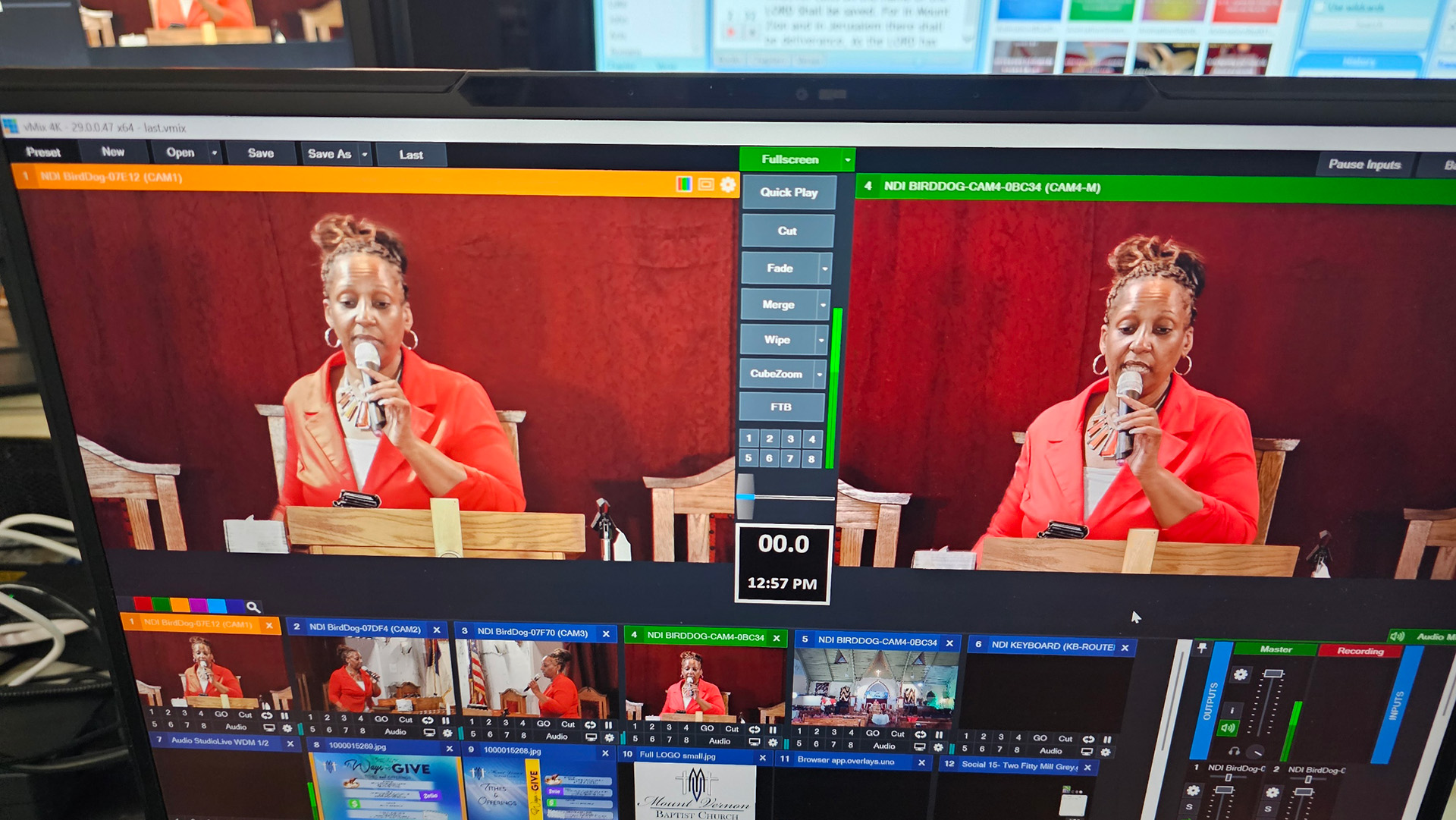
The XL Ultra is positioned at the back of the sanctuary, giving him the reach, detail, and image quality he needs for the main shot. The X4 Ultras are placed on the sides, creating additional angles for establishing shots, alternate perspectives, and added production value.
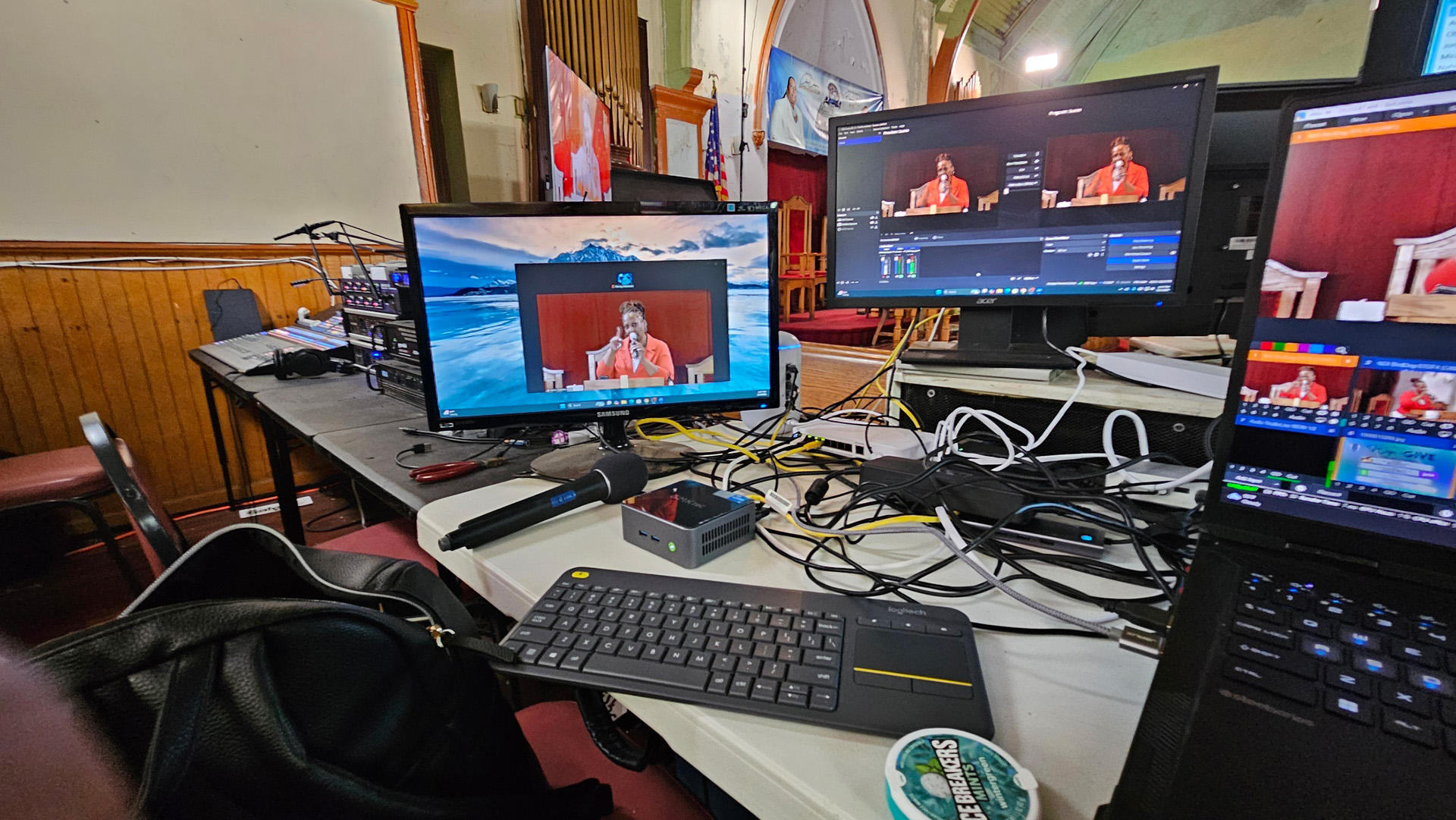
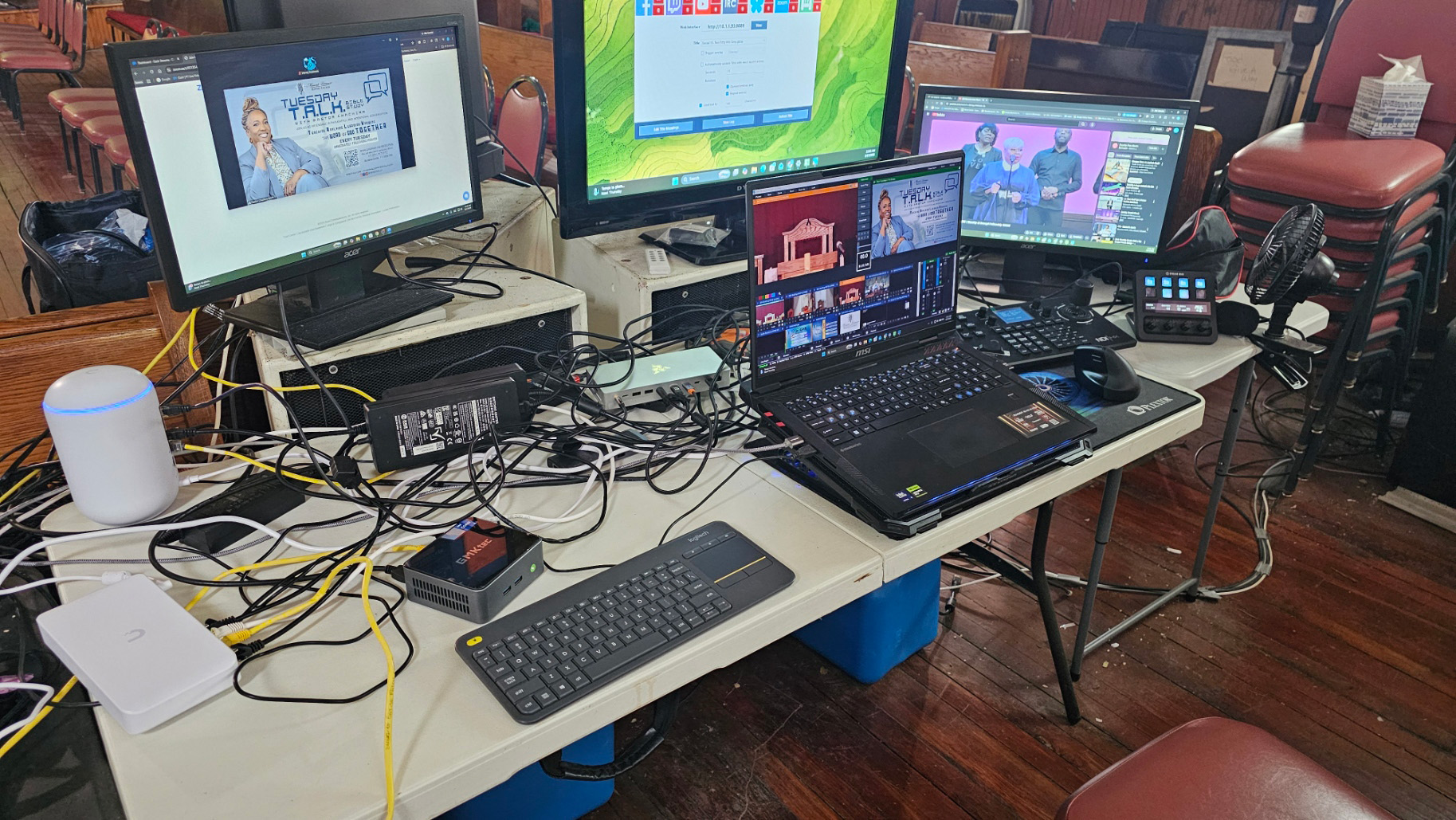
It is a simple but powerful setup: one XL Ultra, three X4 Ultras, a managed PoE network, and a laptop-based production system.
For a one-person operator, that simplicity matters. The cameras can be placed quickly, powered over the network, controlled remotely, and brought into the production environment over NDI.
At the church, much of the physical setup is already in place. Harvey simply adds the cameras and starts building the show.
The result is a workflow that feels fast, flexible, and repeatable.
“The reach of the XL is so good,” Harvey says. “I can run one cable to it, and then throw the X4 Ultras on sticks and put them anywhere.”

Image Quality That Holds the Production Together
For Harvey, the biggest difference is the image.
XL Ultra gives him the main camera look he had been missing from traditional PTZ setups, especially in a house of worship environment where available light can be challenging. The detail, reach, and low-light performance allow the camera to carry the production from the back of the sanctuary.
Harvey also makes use of XL Ultra’s secondary camera as a wide reference shot of the entire sanctuary, giving him an always-available safety angle while the main XL Ultra camera delivers the detailed hero shot he uses for most of the production.
But the surprise was how well the X4 Ultras complemented it.
By manually adjusting white balance and dialing in the color settings, Harvey found that the X4 Ultras could sit remarkably close to the XL Ultra in the same production. Instead of feeling like a mixed-camera setup, the system began to feel like a complete BirdDog ecosystem.
The XL Ultra became the hero camera. The X4 Ultras added movement, variety, and flexibility. Together, they created a polished multi-camera production that Harvey could manage himself.
“It’s shaping up to be a killer workflow,” he says.
NDI Without the Guesswork
Harvey has worked with SDI, converters, external recorders, mirrorless cameras, and networked video. His view on NDI is practical: the benefits are huge, but the network matters.
For his current setup, Harvey runs the XL Ultra and X4 Ultras in 4K over a managed network using an Ubiquiti Dream Machine router and PoE switching. Once the network was configured correctly, performance became extremely reliable.
His advice to anyone considering NDI is straightforward: do not treat the network as an afterthought.
Good hardware, a dedicated video network, proper mDNS handling, and the right network adapter settings make all the difference. Turn off power-saving features such as green Ethernet, use a managed switch or router that can handle the traffic, and build the system with video in mind.
Do that, and NDI becomes one of the biggest advantages in the workflow.
“The advantages of NDI, the setup time, and PoE – it’s unbeatable,” Harvey says.
Built for the Real World
Harvey’s setup is not theoretical. It is used every week, in a real church, by a real operator, solving real production challenges.
That is what makes the combination of XL Ultra and X4 Ultra so effective.
XL Ultra delivers the main image quality, reach, and low-light performance needed from the back of the room. X4 Ultra adds flexible angles and fast placement. NDI and PoE simplify setup. PTZ control allows one person to operate a multi-camera production without needing a full crew.
For houses of worship, conferences, and live events, it is exactly the kind of workflow that makes professional production more achievable.
After years of testing different systems, Harvey has landed on a setup that gives him the quality of a larger production with the agility of a one-person workflow.
His verdict is simple: “I basically stopped using other cameras.”